Metal detection is a critical quality-control step for recycled industrial wiping rags. Because recycled wiping materials may come from used T-shirts, knit garments, sheeting, towels, or other textile sources, the original material can contain buttons, zippers, hooks, clips, rivets, or other hard objects.
For distributors, ship chandlers, MRO suppliers, workshops, factories, automotive repair companies, and marine buyers, one hidden metal fragment can create a hand-injury risk, scratch equipment, damage painted surfaces, or reduce confidence in the entire shipment.
EcoWipePro supplies metal-detected industrial wiping rags for bulk buyers and applies a structured quality-control process before shipment.
Direct answer: Metal detection for industrial wiping rags should combine visual inspection during cutting, machine detection before compression, and final inspection of packed goods before shipment. A single inspection step is not enough for professional bulk supply.
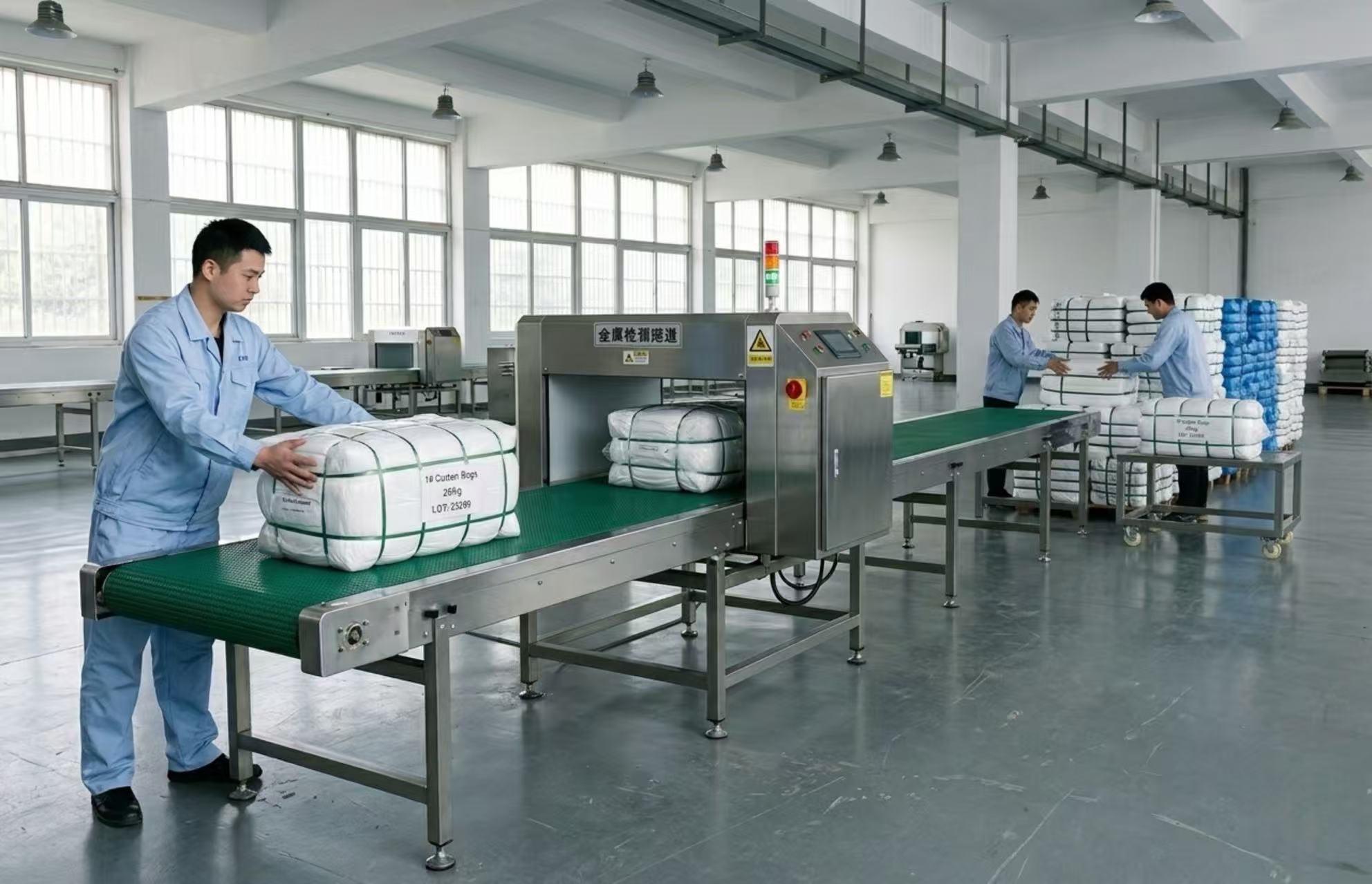
Recycled cotton wiping rags are widely used for engine cleaning, oil wiping, grease cleanup, machine maintenance, CNC coolant cleanup, marine engine-room cleaning, automotive repair, metalworking, and general industrial maintenance.
Unlike new fabric, recycled garments may include original accessories such as:
Most visible hard objects can be removed manually during sorting and cutting. However, small or hidden metal pieces may remain inside folds, seams, collars, cuffs, or multilayer fabric sections. This is why professional metal detection for recycled cotton rags should be treated as a standard quality-control requirement rather than an optional feature.
| Risk Area | Possible Consequence | Why Metal Detection Matters |
|---|---|---|
| Worker Safety | Sharp fragments may cut hands or damage protective gloves. | Reduces handling risk in workshops, engine rooms, warehouses, and factories. |
| Equipment Protection | Metal pieces may scratch machine surfaces, tools, painted panels, or finished components. | Supports safer wiping around machinery and sensitive surfaces. |
| Product Quality | Hard contaminants reduce consistency and create customer complaints. | Improves repeatability between batches and strengthens buyer confidence. |
| Marine Maintenance | Foreign objects may create safety and equipment risks during vessel maintenance. | Supports ship chandlers, marine suppliers, vessel crews, and repair teams. |
| Automotive and Metalworking | Painted, polished, machined, or fabricated surfaces may be scratched. | Helps reduce physical-contaminant risk during wiping and surface preparation. |
EcoWipePro uses a three-stage inspection process to control metal and hard-object contamination in industrial wiping rags.
The first inspection takes place during the sorting and cutting process. Workers inspect garments and textile materials piece by piece. Buttons, zippers, hooks, clips, buckles, labels with hard parts, and unusable sections are removed manually.
This step is especially important for T-Shirt Knit Rags, including dark color rags, light color rags, printed rags, and white T-shirt rags.
Worker training, production supervision, and clear responsibility are essential. If a cutting operator repeatedly allows hard objects to remain in the material, the problem must be traced and corrected immediately.
After cutting, the wiping rags pass through industrial metal-detection equipment before compression and final packing. If the machine detects a metal signal, it gives an alarm and the affected material is removed for reinspection.
This stage is designed to identify smaller or hidden metal fragments that may not be visible during manual inspection.
Important: Machine metal detection does not replace sorting and cutting inspection. It works as a second control point after visible buttons, zippers, and other hard objects have already been removed.
After the rags are compressed and packed, finished packages are checked again before loading. The final inspection confirms that the packed batch has completed the required quality-control procedure before export.
Depending on the order, buyers may request inspection photos, videos, QC records, third-party inspection, or other agreed documentation.
Metal control is particularly important for recycled textile wiping products. Common product lines include:
New fabric wipers generally have a lower risk of garment accessories, but the final inspection standard should still be confirmed according to the application and buyer specification.
Before purchasing metal-detected industrial wiping rags in bulk, buyers should confirm the following points:
| Checklist Item | Buyer Confirmation |
|---|---|
| Product type and raw material | T-shirt knit, sheeting, terry toweling, new fabric, or cotton yarn waste |
| Color grade | White, light color, dark color, printed, or mixed color |
| Metal-control process | Visual inspection, machine detection, and final packed-product inspection |
| Detection requirement | Agree on the practical test method and acceptance standard |
| Packaging | 5kg, 10kg, 20kg, 25kg, carry-handle bag, bale, carton, or pallet |
| Private label | Brand, logo, barcode, bag design, and product description |
| Documentation | QC records, photos, videos, third-party inspection, or certificates |
| Sample approval | Confirm grade, color, absorbency, lint, softness, cut size, and packaging |
For Marine & Shipping, wiping rags are commonly used for engine-room oil wiping, grease cleanup, tool cleaning, machinery maintenance, deck equipment cleaning, and general vessel maintenance.
Ship chandlers, marine suppliers, repair yards, and vessel operators often need stable bulk supply, compressed packing, clear product descriptions, and reliable contaminant control. Metal-detected marine wiping rags can help reduce handling and equipment risks during daily vessel maintenance.
For Mechanical Manufacturing, wiping rags are used for machine cleaning, coolant pickup, workshop maintenance, tool wiping, and production-area cleaning.
For Metalworking, hard contaminants may scratch fabricated parts, machined surfaces, tools, painted equipment, or polished components. Buyers searching for metal-detected shop rags, machine wiping cloths, or bulk cotton cleaning rags should define the inspection process before production.
For Automotive Repair, dark color T-shirt rags are practical for engine oil, grease, and dirty workshop cleaning. White sheeting rags and selected new cotton wipers are more suitable for cleaner surface preparation and panel wipe-down support.
Automotive distributors and MRO suppliers should match the product grade to the application. Metal detection reduces physical-contaminant risk, but buyers should also confirm lint level, softness, absorbency, and whether the product is suitable for the intended surface.
Industrial wiping rag buyers in different markets may have different priorities.
EcoWipePro supports industrial wiping rag buyers in Australia, Singapore, Malaysia, New Zealand, the Middle East, Europe, and North America from its manufacturing base in Jiangsu, China.
Metal detection should be part of a complete industrial-rag quality-control system. The strongest process combines raw-material sorting, careful cutting, manual removal of hard objects, machine detection before packing, final inspection of packed goods, and clear shipment records.
For distributors, ship chandlers, MRO suppliers, workshops, and factories, the right supplier should explain exactly how metal and hard contaminants are controlled rather than relying on a simple marketing statement.
When requesting a quotation, confirm the product type, color grade, monthly volume, packaging, destination, private-label requirements, and required inspection documentation.
Recycled rags may originate from garments containing zippers, snap buttons, hooks, buckles, rivets, clips, or other accessories. Professional sorting, cutting, machine detection, and final inspection are used to control these contaminants.
No. Visual inspection removes obvious hard objects, but small or hidden metal fragments may be missed. A stronger quality-control process combines manual inspection with machine metal detection and final packed-product inspection.
Metal detection is designed to identify detectable metal contaminants. Non-metal hard objects require separate visual and manual control. Buyers should define the required test method, acceptance standard, and inspection documentation.
Recycled T-shirt knit rags, sheeting rags, terry toweling rags, and cotton yarn waste may all be supplied under agreed metal-control procedures.
Inspection photos, videos, QC records, and third-party inspection can be discussed according to the product, quantity, buyer specification, and contract requirements.
Yes. Samples help buyers confirm grade, color, cotton content, absorbency, lint level, softness, cut size, packaging, and suitability before placing a bulk order.
Tell us your application, product grade, estimated monthly volume, packaging needs, destination, and metal-detection requirements. EcoWipePro can recommend suitable recycled cotton rags, packaging formats, and a practical quality-control plan.


